Facing an unprecedented demand for modernization and agility, the nation’s nuclear defense infrastructure is undergoing a quiet but profound cultural shift. To accelerate that shift, the Y‑12 National Security Complex recently hosted the inaugural Production Accelerated by Collaboration Workshop (PAC Works). The landmark event convened more than 175 innovators, academic researchers, and industry specialists to align research and development efforts across the Nuclear Security Enterprise (NSE).
The message from the workshop was clear. To maintain national security and a robust nuclear deterrence, the enterprise must break down historic operational barriers and move with greater speed.
New era, greater urgency
The scale of the challenge facing the NSE is historic. Abe Mathews, senior director of Analytical Chemistry at Y-12, noted how drastically the operational pace has changed over his 25-year career, including resource needs.
“We thought we’d have a much smaller staff by now, but we have more than 10,000 people on site each day,” Mathews remarked. “We’re currently working on more simultaneous programs than at any other point post-Cold War.”
Mathews emphasized that the challenges of maintaining modern nuclear security capabilities cannot be solved in isolation. “These challenges are not single-site challenges. They aren’t single-university challenges. They are American challenges,” he said.
This sentiment was echoed by Carl Beard, director of the Production Operations Division at the Pantex Plant, who cautioned that modern computing and administrative barriers have sometimes led to isolated thinking. "Our sites have become stovepiped,” Beard warned. “We need to think and work as an enterprise."
Commitments, partnerships accelerate technology integration
PAC Works did not just generate ideas—it delivered concrete commitments to accelerate technology integration. Key wins include the following:
- Commitments from Y-12, Pantex, and the Savannah River Site for dedicated funding to seed and support collaborative projects
- Development of an "anti-redundancy" database of site capabilities to streamline partnership development and prevent duplication of effort
- Facilitation of more than 15 active partnerships across 10 crucial technical areas
- A growing footprint with the first National Security Prototype Center facility in Oak Ridge, scheduled to be operational in 2027, to serve as a physical hub for these collaborative efforts
Accelerating the talent and technology pipeline
Another focus of the workshop was the need to rapidly recruit, train, and integrate the next generation of nuclear security professionals. According to workshop data, half of the NSE workforce currently has less than 5 years of experience. To combat this steep learning curve, leadership is looking toward advanced knowledge preservation tools (such as Joulix) and deeper integration with academic partners.
Evelyn Mullen, associate vice chancellor for Nuclear Security Initiatives, Texas A&M University System Nuclear Security Office, emphasized the value of bringing university faculty and students directly into the fold. "It’s important to talk to your university partners about your long-term goals," Mullen said. She also championed the concept of "researcher in residence" programs to increase collaboration.
By working with academic institutions, the NSE can use surrogates and open-source models to solve complex production problems without compromising classified data. Randy Dziendziel, senior director of Development at Y-12, highlighted how partnering with academic institutions like the University of Tennessee on lithium research, and leveraging off-site facilities like Teledyne Brown, can compress timelines dramatically.
When university partners are fully integrated, the speed of innovation increases. Shannon Yee from the School of Mechanical Engineering at Georgia Tech described this agility, noting that academic institutions can move exceptionally fast for specific research tasks. "With a BOA [basic ordering agreement] in place, we take 48 hours for a bid or no-bid decision, then 10 days to prepare a proposal,” said Yee. “Within two weeks we can get to work on your problem."
Failure isn’t an option
For many participants, the most valuable outcome of the two-day workshop was the opportunity to bypass traditional bureaucratic firewalls and establish direct lines of communication.
Jared Brown, director of Research, Development, Test, and Evaluation at Pantex stressed that accelerating production ultimately relies on human connections. "It comes down to communications. We need to know about our partners in industry and where they have been successful," Brown said.
Ambrose Wolf, principal research and development scientist at the Kansas City National Security Campus, echoed Brown’s sentiment. “We need to break down the silos among all entities, and get all relevant people on the team,” Wolf said. “It's amazing how little we talk, and how much we can accomplish when we do.”
As the NSE moves forward with consolidating joint research proposals and mobilizing the newly earmarked FY 2027 funds, the focus of the workshop was perhaps best summarized by Wolf. "We want to work with the best minds, and we don't care where they sit,” stressed Wolf. “We have a very important mission. We can’t not do it. We can’t not succeed."
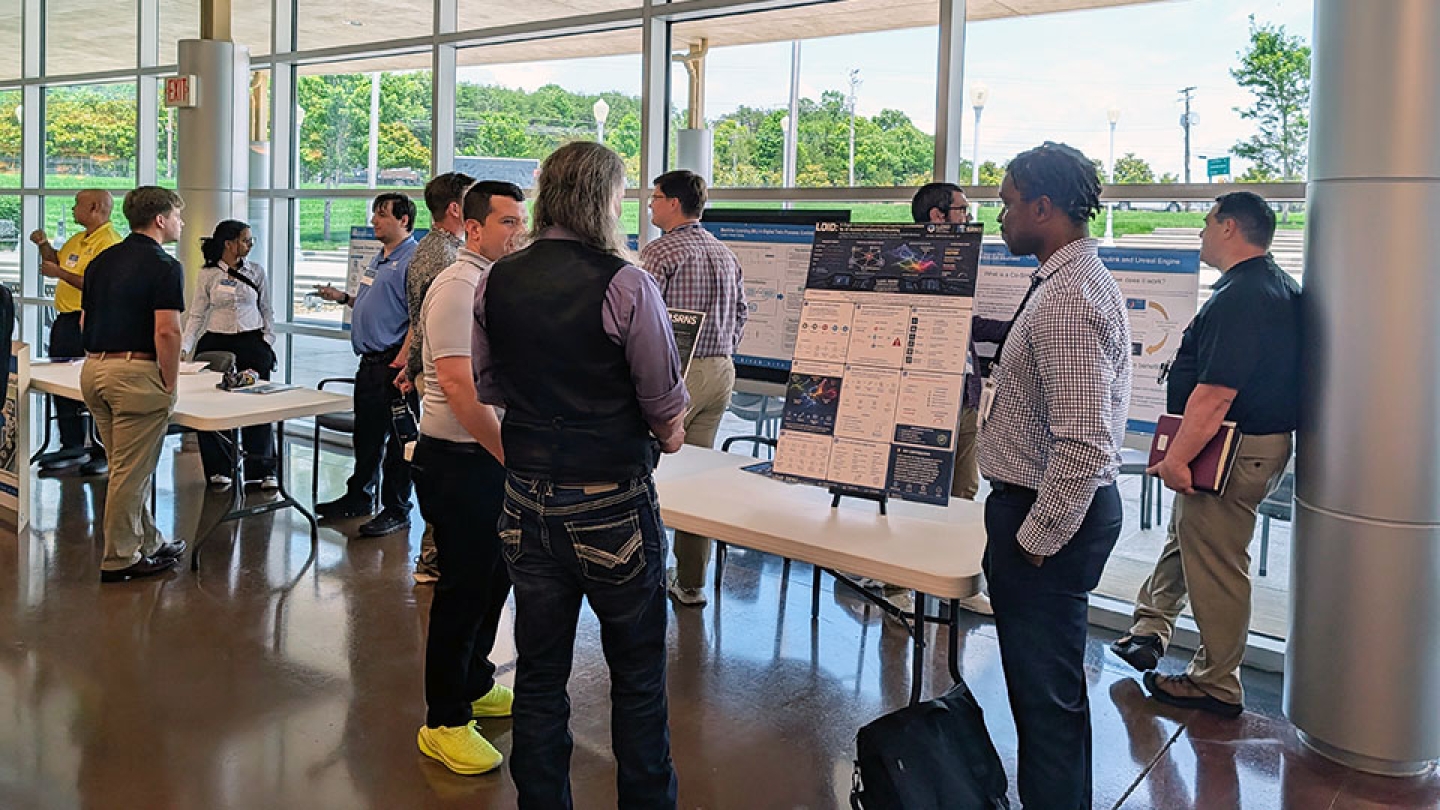
Y-12 National Security Complex hosted the inaugural Production Accelerated by Collaboration Workshop, which convened more than 175 innovators, academic researchers, and industry specialists to align research and development efforts across the Nuclear Security Enterprise.
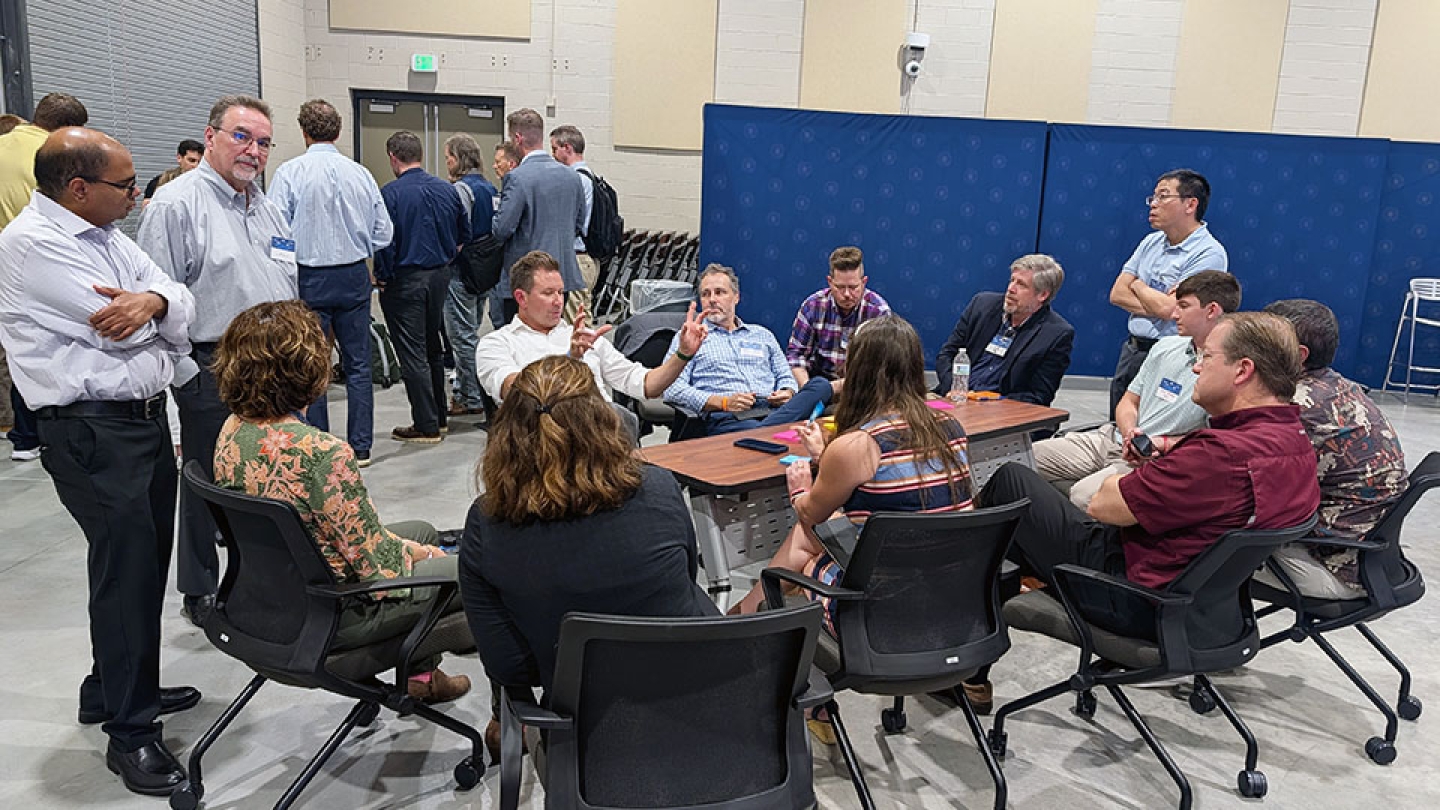
During the second day of the Production Accelerated by Collaboration Workshop, attendees were able to break into groups for interactive workshops and brainstorming.